

Indica vs Sativa: What is the Real Difference?


Indica, Sativa, and Hybrid are among the first labels shoppers notice when comparing cannabis flower. They can make a large catalog easier to browse, but they are often asked to communicate more than they reliably can.
These labels do not measure cannabinoid strength, guarantee a particular experience, or replace current batch information. The most useful comparison combines conventional lineage, aroma, grade, bud size, photographs, availability, and the product's available certificate of analysis.
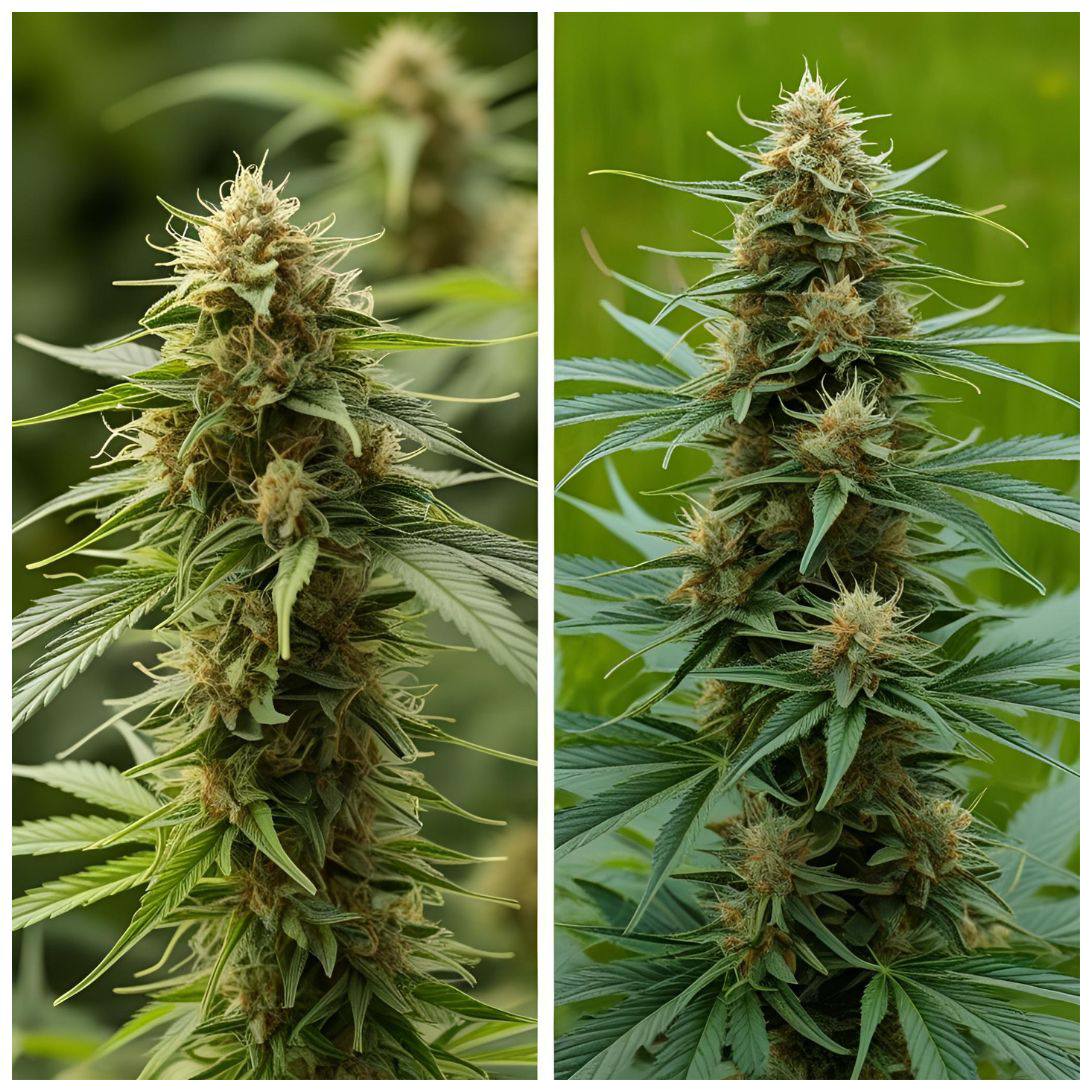
The actual difference between Indica and Sativa
Historically, Indica and Sativa were used to describe differences in plant form, geographic ancestry, and cultivation patterns. Plants described as Sativa are often represented as taller, with narrower leaflets and longer flowering cycles. Plants described as Indica are often represented as shorter, with broader leaflets and shorter flowering cycles.
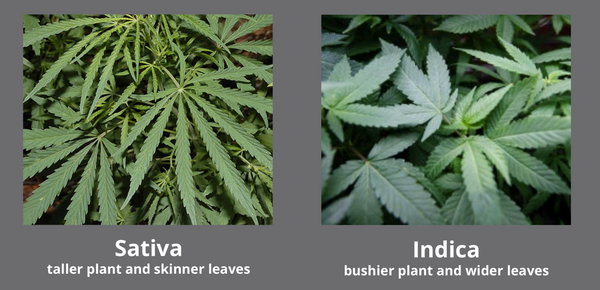
Those broad plant descriptions are not a reliable shortcut for the chemistry of a finished flower product. Modern cultivars have been hybridized extensively, names are not always standardized, and different suppliers may use the same familiar name for cultivars with different reported parentage.
A study of commercial cannabis chemistry found that common Indica, Hybrid, and Sativa labels did not consistently align with observed chemical diversity. That is one reason to treat the label as an organizational aid rather than a prediction.
Why the label cannot predict potency or a guaranteed experience
Indica, Hybrid, and Sativa are not potency levels. A family label cannot tell you the cannabinoid values of a batch, and the same named cultivar may vary from one harvest to another.
A label also cannot account for product format, amount used, batch chemistry, or individual response. Plain Jane therefore does not use strain family to promise an effect. Review the current product page and available batch COA for product-specific information.
How Plain Jane organizes THCA flower
Plain Jane uses two related but distinct fields. Strain family is the exclusive three-way shopping bucket: Indica, Hybrid, or Sativa. Strain profile is the more detailed five-position description shown on eligible product pages.
| Shopping family | Public profiles routed to that family | What the family does |
|---|---|---|
| Indica | Indica | Groups products clearly classified on the Indica side |
| Hybrid | Indica-leaning Hybrid, Hybrid, or Sativa-leaning Hybrid | Groups the narrow center band and every public profile containing Hybrid |
| Sativa | Sativa | Groups products clearly classified on the Sativa side |
The rule is intentionally strict: the leaning-Hybrid labels are used only close to the center, and every label containing Hybrid shops through the Hybrid collection. Products farther from center use the simpler Indica or Sativa label. Each verified product has only one family, so cards, filters, menus, and collections point to one consistent destination.
The five-position strain profile
- Indica
- Indica-leaning Hybrid
- Hybrid
- Sativa-leaning Hybrid
- Sativa
The profile marker communicates the best-supported conventional classification for the listed cultivar. It does not claim a measured genetic percentage. When product-specific lineage information is incomplete or conflicting, Plain Jane uses a broader supported classification or leaves the product unclassified rather than inventing a precise ratio.
What is Indica THCA flower?
The Indica THCA Flower collection is the shopping family for products with an Indica profile. Use the product-page profile to see which description applies to a specific cultivar.
Then compare aroma, grade, bud size, current photos, available weights, price, availability, lineage notes when provided, and the current batch COA. The family label is one comparison point, not a potency scale or experience guarantee.
What is Hybrid THCA flower?
The Hybrid THCA Flower collection is the shopping family for neutral Hybrid products and the narrow Indica-leaning or Sativa-leaning Hybrid profiles closest to center. Hybrid does not automatically mean an exact 50/50 genetic ratio.
Every public profile containing the word Hybrid remains in this collection, which keeps product labels, cards, internal links, and collection membership consistent.
What is Sativa THCA flower?
The Sativa THCA Flower collection is the shopping family for products with a Sativa profile. The product-page profile shows the more specific classification.
As with the other families, use current product and batch details to compare flower. The word Sativa does not establish cannabinoid strength or guarantee a particular experience.
Why Plain Jane avoids unsupported Indica-to-Sativa ratios
Ratios such as 70/30 or 60/40 look precise, but that precision is meaningful only when a reliable cultivar-specific source actually documents it. A number repeated across retail pages is not automatically verified, and a strain name alone is not enough to prove a ratio.
The five-position profile avoids false precision. When reliable product-specific information supports parentage or a reported ratio, it may be summarized in the lineage note. Otherwise, the product stays within the broader supported profile.
Strain family is separate from grade
Strain family organizes conventional lineage. Grade places flower within Plain Jane's merchandising range. These attributes are independent, so any family can appear across applicable grades.
- Exotic THCA Flower
- Indoor THCA Flower
- Light Assist THCA Flower
- Greenhouse THCA Flower
- Budget THCA Flower
Strain family is separate from bud size
Bud size describes the physical size of the flower in the package. It does not change the cultivar's family or profile.
A practical way to choose THCA flower
- Start with family. Use Indica, Hybrid, or Sativa to narrow the current catalog.
- Check the profile. Open an eligible product page for the more detailed five-position classification.
- Compare aroma. Cultivars within the same family can have different aroma descriptions.
- Choose grade and bud size separately. Neither attribute changes lineage.
- Review current product details. Confirm photos, weights, pricing, availability, lineage notes, and batch information.
- Read the available batch COA. Use it for the reported cannabinoid and testing information rather than inferring those values from a familiar strain name.
Why can the same strain be classified differently elsewhere?
Strain names are not always standardized. Different breeders or suppliers may use the same or similar name for cultivars with different reported parentage. One source may also use the broad word Hybrid while another gives a supported Indica or Sativa lean.
Plain Jane prioritizes product-specific supplier, farm, and breeder information when it is available, then uses reputable cultivar references for confirmation. A displayed profile should be read as the classification for that listed cultivar, not a universal statement about every product sold under a similar name.
Frequently asked questions
What is the main difference between Indica, Sativa, and Hybrid THCA flower?
On Plain Jane, the main difference is the product's three-way shopping family. Indica and Sativa families contain products clearly classified on their respective sides, while the Hybrid family contains the narrow center band: Indica-leaning Hybrid, Hybrid, and Sativa-leaning Hybrid.
Is a Hybrid THCA strain always 50% Indica and 50% Sativa?
No. Hybrid does not automatically mean an exact 50/50 ratio. Plain Jane does not convert a balanced classification into an unsupported percentage.
Does an Indica-leaning Hybrid shop as Indica or Hybrid?
It shops through the Hybrid family and displays Indica-leaning Hybrid as its more specific profile. A Sativa-leaning Hybrid follows the same rule in the Hybrid collection.
Which THCA strain family is strongest?
There is no strongest family. Indica, Hybrid, and Sativa do not function as potency rankings. Review current product and batch information instead.
Can strain family guarantee how a product will affect me?
No. A conventional lineage label cannot predict an exact individual experience. Use it as one part of a broader product comparison.
Does bud size or grade change a strain's family?
No. Grade, bud size, and strain family are independent. The same supported cultivar classification remains in place across applicable grades and sizes.
Where can I find the lab report for a THCA product?
Open the individual product page and look for its available certificate of analysis or lab-report link. The COA provides batch-specific testing information; the strain profile explains conventional lineage classification.